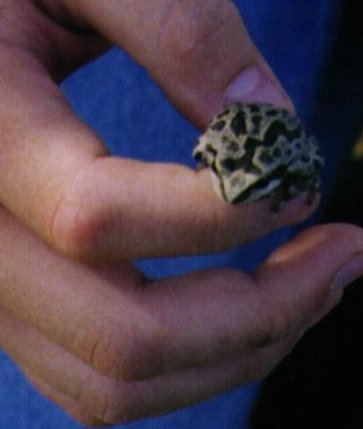
Tree frogs make up the family Hylidae. Tree frogs are usually small to medium-sized frogs that spend a lot of time in trees. Tree frogs are amphibians, meaning they are cold blooded animals that must keep their skin moist. Their body color ranges from brown and gray to green. Some tree frogs are able to change their color according to the color of their surroundings. They are found in temperate and tropical areas all over the world. Most tree frogs have large disks at the end of their toes that allow them to cling tightly to upright surfaces.
Tree frogs hybernate, or sleep in a state of inactivity, during the cold months of winter. They usually bury themselves in tree trunks or in the ground. They stay there until spring time comes and it warms up.
After the winter when they are hybernating, they come out of the ground. Now it's mating season. The mating season usually coincides with wet, rainy periods. The male tree frogs then usually call out. Their calls range from melodious chirps to raucous growls. The females, attracted by the calls, then go up to the male. They then proceed to mate. The female then lays from one to several hundred eggs in a pond, the eggs then become attached to plants and hatch in several days. Then tadpoles are born. There are some exemptions to this. One is the forest frog, which is a type of tree frog. It lays it's eggs in trees that are around the pond. The egg cases are foamy masses attached to the branches. The outside hardens while the inside stays moist and allows the tadpoles to grow a little. Then, after the tadpoles are ready, the outer shell turns soft again and the tadpoles drop into the nearby pond.
When they are born, tadpoles are not yet ready to go into the outside world. Tadpoles are amphibians, which comes from two Greek words meaning "two lives", refering to the two very different stages of their life. As a tadpole, they swim around eating almost constantly. They nibble with their sharp teeth on underwater plants. Some even will eat dead animals, including other dead tadpoles. Slowly the tadpole gains the things it needs to survive on land. First it gains it's hind legs. Then it gains one of it's front legs. Then it gains another. All this while it's head and tail are shrinking. About six weeks after entering the pond, the frogs have gained their lungs and are ready to become adults. When they leave the pond, they still have a little of their tail left.
Webpage by: Fishboy___Pictures by: Fishboy___Feel free to use any pictures from this page.